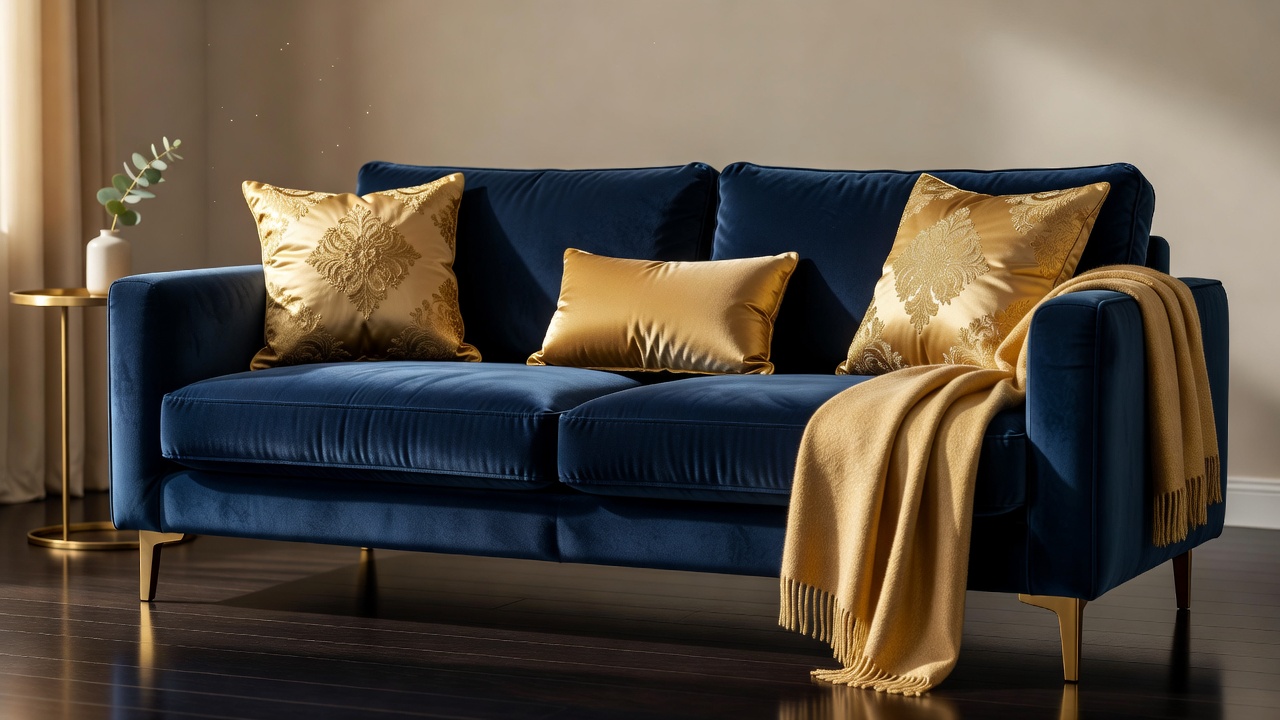
Few materials command the visual presence of velvet. Its unique structure captures and reflects light in a way that flat weaves simply cannot, giving colors incredible depth and dimension. A velvet sofa serves as an instant statement piece, elevating a room with a sense of luxury, warmth, and tactile comfort. However, living with velvet requires understanding its specific properties and care requirements.
Cotton vs. Synthetic Velvet
Not all velvets are created equal. The term "velvet" refers to the weave structure—a dense pile of evenly cut fibers that stand upright—rather than the fiber itself. Traditionally made from silk, modern velvet sofas are predominantly woven from either cotton or synthetic fibers, each offering distinct advantages.
- Cotton Velvet: Highly sought after for its matte finish and deeply authentic feel. Cotton velvet absorbs dye beautifully, resulting in incredibly rich colors. However, it is prone to "crushing," where the pile gets permanently flattened in high-traffic seating areas, leaving visual shadows. It is also more susceptible to stains and sun fading.
- Synthetic Velvet (Polyester/Nylon): Often marketed as "performance velvet." This is the superior choice for busy households, families with children, or pet owners. High-quality synthetic velvets closely mimic the feel of natural fibers but offer exceptional resistance to fading, crushing, and liquid spills. Many performance velvets repel liquid long enough for you to wipe it away before it sets.
Durability and Pet Considerations
A common misconception is that velvet is delicate. In reality, velvet has no loose threads or raised weaves for a pet's claws to snag on, making it surprisingly resilient against scratching cats. Because of its dense pile, dirt and pet hair sit on the surface rather than becoming deeply embedded in the woven structure.
That being said, velvet is an absolute magnet for pet hair and dust. If you have a white dog and purchase a navy blue velvet sofa, you will need to keep a lint roller or a velvet brush close at hand. The material requires regular, gentle brushing to keep it looking pristine.
Cleaning and Maintenance
Maintaining a velvet sofa is not necessarily difficult, but it is specific. Spills should never be rubbed. Rubbing pushes the liquid deeper into the pile and permanently distorts the nap. Instead, immediately blot the area with a highly absorbent cloth.
For weekly maintenance, attach an upholstery brush to your vacuum cleaner and gently vacuum in the direction of the pile. If the velvet begins to look bruised or flattened, you can use a handheld garment steamer holding the nozzle a few inches away to lift the pile, followed by a gentle brushing with a soft-bristled clothes brush.
Styling a Velvet Centerpiece
Because velvet is visually heavy and luxurious, it pairs beautifully with contrasting textures. Surrounding a velvet sofa with sleek materials like glass, polished brass, or raw wood creates a dynamic, layered interior. Popular contemporary colors include jewel tones like emerald green, sapphire blue, and mustard yellow, which capitalize on the fabric's natural ability to highlight deep dye saturation.
Whether you lean toward a mid-century modern silhouette or a plush, traditional chesterfield design, a velvet sofa offers an uncompromising blend of comfort and dramatic aesthetic impact.