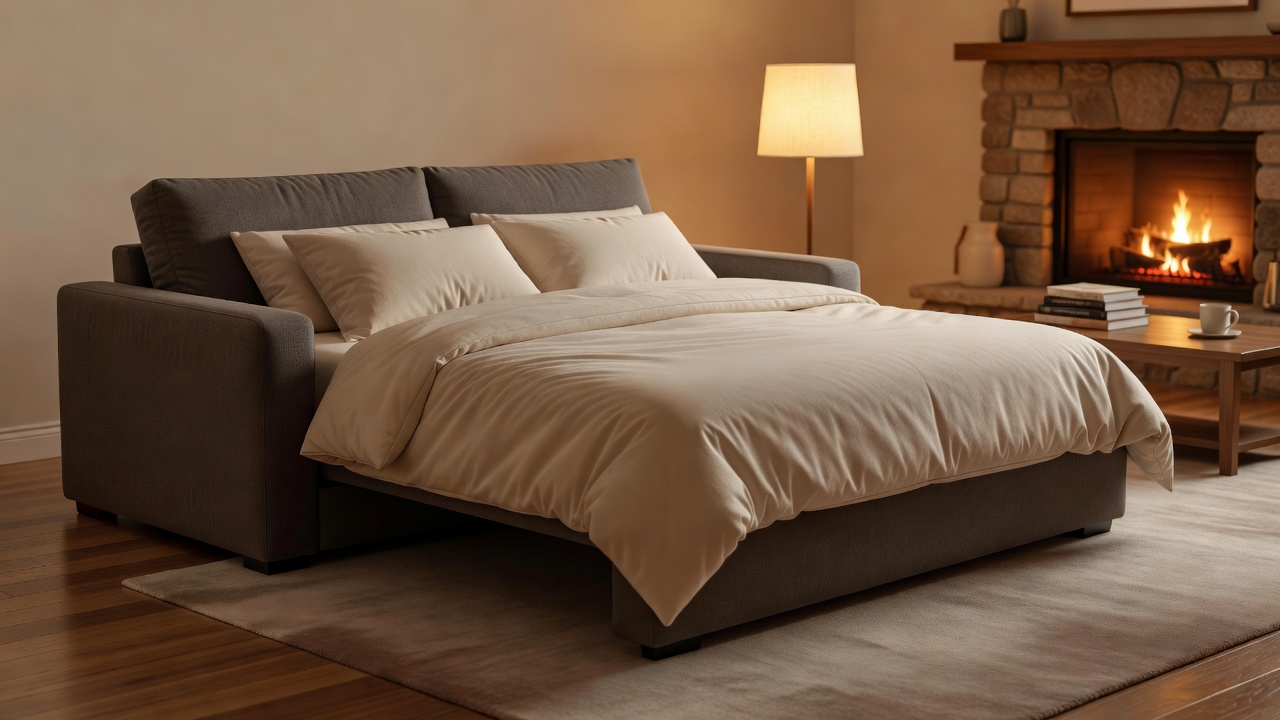
The sleeper sofa has historically suffered from a poor reputation. The mere mention of a sofa bed used to conjure images of thin, lumpy mattresses and unforgiving metal bars digging into a guest's back. Fortunately, modern engineering and material science have completely transformed the sleeper sofa. Today, it is entirely possible to find a unit that serves as a deeply comfortable daily couch and a genuinely restful bed for overnight visitors.
Understanding the Mechanisms
When selecting a sleeper sofa, the mechanical action used to transition from couch to bed is the most critical factor. Different mechanisms suit different room layouts and usage frequencies.
- Traditional Pull-Out (Trundle): The cushions are removed, and a metal frame holding a folded mattress is hoisted up and pulled out. These offer the closest experience to a traditional bed but are notoriously heavy and require significant clearance space in front of the sofa.
- Click-Clack (Futon style): The backrest simply folds backward until it sits flush with the seat, creating a flat sleeping surface. These are incredibly space-efficient, lightweight, and modern in appearance, but the sleeping surface is exactly the same foam used for seating, which can sometimes be too firm.
- Pop-Up (Trundle Lift): Often found on sectionals, a lower drawer pulls out from beneath the seats, and a hidden cushion pops up to sit flush with the main seat cushions, creating a large, flat lounge area that doubles as a bed.
Navigating Mattress Options
If you opt for a traditional pull-out mechanism, the quality of the mattress dictates the guest's experience. Standard innerspring mattresses are the most common and affordable, but they are also the most prone to causing the dreaded "metal bar" sensation if the padding is insufficient.
Memory foam mattresses are a significant upgrade. They contour to the body and completely eliminate the feeling of the metal framework below. However, they can sleep quite warm. A modern compromise is the hybrid mattress, which utilizes a thin layer of highly responsive pocket coils topped with cooling gel memory foam, offering both support and temperature regulation.
Space and Placement Strategies
Before purchasing a sleeper sofa, you must calculate both its closed and fully deployed footprints. A standard queen sleeper sofa can extend up to 90 inches into the room when open. Ensure that coffee tables are lightweight enough to be easily moved out of the way, and that the deployed bed does not completely block access to doorways or bathroom routes.
Weight is another crucial consideration. A robust pull-out sofa with a heavy-duty steel frame and a memory foam mattress can weigh upwards of 250 pounds. This is vital to keep in mind if you are placing the furniture in an upstairs bonus room, an attic conversion, or an older home with questionable floor joist structural integrity.
The Balancing Act
Ultimately, a sleeper sofa is a balancing act between two distinct functions. If it will be used as a bed 90% of the time (such as in a dedicated guest room), prioritize the mattress quality and bed size, even if the seating posture is slightly upright. If it will be sat on daily in a living room and only slept on twice a year, prioritize the seating foam density, upholstery durability, and aesthetic design. By clearly identifying its primary role, you can select a mechanism and style that perfectly accommodates your home's needs.